
DaBaby, whose real name is Jonathan Lyndale Kirk, is an American rapper, songwriter, and entrepreneur whose DaBaby net worth is estimated at $4 million to $8 million in 2026. His fortune has been built primarily through recorded music, streaming, touring, collaborations, royalties, and business interests connected to Billion Dollar Baby Entertainment.
His rise was remarkably fast. After years of independent releases and performances around Charlotte, North Carolina, he broke into the mainstream in 2019 with Baby on Baby and the hit single “Suge.” His follow-up album, Kirk, debuted at No. 1 on the Billboard 200, while “Rockstar” with Roddy Ricch became one of the biggest records of his career.
However, estimating a celebrity’s wealth requires more than looking at album sales or headline-making success. Music revenue is divided among artists, labels, publishers, producers, managers and other rights holders. Taxes, business expenses and personal liabilities also affect what an artist ultimately keeps.
For that reason, this article uses a range rather than claiming an exact personal fortune.
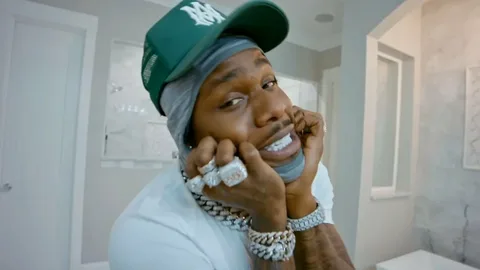
Quick Facts About DaBaby
| Fact | Details |
| Full Name | Jonathan Lyndale Kirk |
| Stage Name | DaBaby |
| Date of Birth | December 22, 1991 |
| Age | 34 years old |
| Birthplace | Cleveland, Ohio, United States |
| Raised In | Charlotte, North Carolina |
| Nationality | American |
| Profession | Rapper, songwriter, entrepreneur |
| Estimated Net Worth | $4 million–$8 million |
| Years Active | 2014–present |
| Record Label Affiliations | South Coast Music Group, Interscope Records |
| Business Venture | Billion Dollar Baby Entertainment |
| Marital Status | Not publicly confirmed |
| Children | Publicly reported as a father of four |
Financial disclaimer: The $4 million–$8 million figure is an editorial estimate based on publicly available career and business information. It is not an audited statement of Jonathan Kirk’s personal finances.
Table of Contents
What Is DaBaby’s Net Worth in 2026?
DaBaby’s estimated net worth in 2026 is $4 million to $8 million.
The figure reflects his long-running music career, successful recordings, live performances, streaming activity, collaborations and business interests. It does not represent his total career revenue.
That distinction is particularly important for recording artists.
A song can generate millions of dollars in commercial activity without the performer personally receiving the entire amount. Record labels, publishers, distributors, producers, managers and other rights holders may all have contractual claims on revenue.
The same principle applies to touring. A concert or festival appearance may generate substantial gross revenue, but production, travel, crew, management, agency commissions and taxes can significantly reduce the amount retained by the artist.
His financial story is therefore best understood through the development of his career and the different businesses that supported it.
Financial Overview
Jonathan Kirk’s wealth-building journey can broadly be divided into three stages.
Independent Development
Before becoming a mainstream star, he spent several years releasing music independently and building an audience.
This period was important because it established the foundation for his later success. Instead of entering the industry with an established celebrity profile, he developed his identity through regional performances, independent projects and growing online attention.
Mainstream Breakthrough
The second stage came in 2019.
Baby on Baby introduced him to a much larger audience, while “Suge” became a breakout hit. Later that year, Kirk reached No. 1 on the Billboard 200.
His commercial momentum continued into 2020 with Blame It on Baby and “Rockstar,” featuring Roddy Ricch.
This was the period when his earning potential expanded rapidly.
Greater visibility meant more opportunities for concerts, festivals, collaborations, endorsements and other commercial activity.
Post-Peak Career
The third stage has been more complicated.
The 2021 Rolling Loud controversy affected his public image and resulted in professional consequences, including lost festival opportunities and the end of a major brand relationship.
Nevertheless, his existing catalog continued to have value. Successful recordings can generate royalties and streaming revenue long after their original release.
That means a decline in mainstream visibility does not automatically eliminate an artist’s income.
Who Is DaBaby?
Jonathan Lyndale Kirk was born on December 22, 1991, in Cleveland, Ohio.
His family later moved to Charlotte, North Carolina, where he spent much of his upbringing. Charlotte became an important part of his identity and eventually played a central role in his development as a rapper.
He began pursuing music professionally around 2014.
During his early years, he released independent projects and developed the energetic performance style that later became one of his trademarks. He initially performed under the name Baby Jesus before adopting DaBaby.
His early work is important to understanding his financial rise because the mainstream success came after years of development rather than appearing instantly.
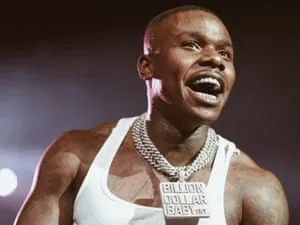
Early Music Career
Kirk’s first professional years were defined by persistence and frequent releases.
He worked within Charlotte’s developing hip-hop scene while building a reputation through independent music and performances.
During this period, he developed relationships that would eventually help connect him with the larger music industry.
His growing profile attracted the attention of South Coast Music Group, creating a bridge between his independent career and major-label opportunities.
This stage also illustrates how modern hip-hop careers can develop differently from traditional music-industry paths.
Artists can now build audiences through streaming platforms, social media, independent distribution and regional performance networks before securing major-label backing.
The Breakthrough With Baby on Baby
The decisive turning point arrived in 2019, when DaBaby released Baby on Baby.
The project included “Suge,” which became his breakout mainstream record.
The song helped transform him from a rising regional artist into a nationally recognized rapper.
Its importance went beyond chart performance.
A major hit can change an artist’s commercial position by increasing demand for live appearances, collaborations, interviews, merchandise and sponsorship opportunities.
In Kirk’s case, the success of “Suge” was followed quickly by another major album, allowing him to maintain the momentum rather than depending on a single successful record.
Kirk Reaches No. 1
Later in 2019, he released Kirk, using his family surname as the album title.
The project debuted at No. 1 on the Billboard 200, confirming that his breakthrough had developed into sustained commercial success.
The album expanded his catalog and increased his visibility among both listeners and other artists.
A larger catalog can be financially valuable because individual recordings may continue producing income through streaming, publishing, radio and licensing.
It also increases an artist’s leverage in collaborations and live entertainment.
At this stage of his career, his financial opportunities extended well beyond album sales.
Blame It on Baby and Rockstar
In 2020, DaBaby released Blame It on Baby.
The album included “Rockstar” featuring Roddy Ricch, which became the defining commercial record of his career.
The track reached No. 1 on the Billboard Hot 100 and became one of the most recognizable rap songs of the year.
The Recording Academy has recognized DaBaby with multiple Grammy nominations, including recognition associated with “Rockstar,” “Suge” and “Bop.”
A hit of this scale can create several potential revenue streams:
- Streaming royalties
- Publishing income
- Performance royalties
- Radio revenue
- Licensing opportunities
- International consumption
- Catalog value
- Increased touring demand
- Collaboration opportunities
The exact amount Kirk personally received from these sources is not public.
That is why the commercial performance of “Rockstar” can demonstrate his earning power without proving a specific dollar amount in his personal fortune.
Career Timeline
| Year | Career Development |
| 2014 | Begins pursuing music professionally |
| 2015–2017 | Builds an audience through independent releases and performances |
| 2017 | Develops Billion Dollar Baby Entertainment |
| 2018 | Gains stronger industry attention |
| 2019 | Releases Baby on Baby |
| 2019 | “Suge” becomes a breakout hit |
| 2019 | Kirk debuts at No. 1 on Billboard 200 |
| 2020 | Releases Blame It on Baby |
| 2020 | “Rockstar” becomes a major No. 1 hit |
| 2021 | Receives significant Grammy recognition |
| 2021 | Rolling Loud controversy affects bookings and partnerships |
| 2022 | Releases Baby on Baby 2 |
| 2023–2026 | Continues music, collaborations and business activity |
Why His Rise Was So Fast
Several factors came together during Kirk’s breakthrough.
First was consistency. He released music frequently and remained visible to listeners.
Second was timing. His breakthrough happened during an era when streaming and social platforms could rapidly move a regional artist into the mainstream.
Third was distinctiveness. His delivery, production choices, visual presentation and performance style made his records recognizable.
Most importantly, the breakthrough was followed by additional commercial successes.
The sequence was roughly:
independent work → breakout single → successful album → No. 1 album → major collaborations → blockbuster hit → increased commercial demand.
That sequence explains more about his wealth-building potential than any single celebrity-net-worth number.
Billion Dollar Baby Entertainment
Music was not the only area in which Kirk expanded his professional interests.
He established Billion Dollar Baby Entertainment, creating a business platform around his artist career.
The imprint became associated with artists including Stunna 4 Vegas, allowing Kirk to operate in a role that extended beyond performing his own songs.
A music business can potentially generate income through artist projects, distribution, publishing and related commercial activity.
However, the exact ownership structure and current valuation of Billion Dollar Baby Entertainment are not publicly disclosed.
It would therefore be misleading to assign a specific dollar value to his interest in the company without reliable financial documentation.
What We Know About His Wealth
There is a clear distinction between documented career achievements and verified personal wealth.
Public records and reputable industry sources can establish his chart performances, major releases, Grammy nominations, label relationships and other career milestones.
They do not provide a complete picture of his personal balance sheet.
There is no comprehensive public record showing:
- Current bank balances
- Private investment accounts
- Exact recording-contract terms
- Personal debt
- Complete property holdings
- Current tax liabilities
- Exact royalty splits
- Private business valuations
- Full ownership percentages in music-related assets
As a result, an exact net-worth figure would imply a level of certainty that the available evidence does not support.
The $4 million–$8 million estimate should therefore be treated as a reasonable range rather than a verified financial statement.
Why a Range Is Better Than an Exact Number
Celebrity wealth is often presented as a single figure because it looks authoritative.
In reality, private finances rarely work that way.
An artist can have valuable recordings while sharing ownership with a label or other rights holders. They can generate large touring revenues while also carrying significant operating expenses.
Assets can also change in value, while debts and taxes can materially alter the final calculation.
For that reason, a range provides a more transparent picture.
The available evidence clearly supports the conclusion that Kirk became a multi-million-dollar entertainment figure during his commercial peak. The precise amount he retained and the value of his current assets, however, remain private.
That distinction will become even more important when examining his income streams, business activities and the financial consequences of the 2021 controversy.
Income Sources
Jonathan Kirk’s earnings have come from several parts of the entertainment business rather than one fixed salary.
For a successful recording artist, revenue can come from recorded music, streaming, touring, collaborations, publishing, licensing, merchandise, endorsements and business interests. The amount ultimately retained by the artist depends on contracts, ownership arrangements, expenses and taxes.
That distinction is particularly important when discussing a rapper whose commercial career reached its peak within a relatively short period.
Music and Streaming Revenue
Recorded music remains one of Kirk’s most important financial assets.
His catalog includes projects such as Baby on Baby, Kirk, Blame It on Baby and Baby on Baby 2. His best-known songs include “Suge,” “Bop” and “Rockstar” featuring Roddy Ricch.
Successful recordings can continue generating revenue years after their original release.
Potential sources include:
- Streaming
- Digital downloads
- Physical sales
- Mechanical royalties
- Performance royalties
- Publishing
- Radio usage
- Licensing
- International distribution
However, there is no universal streaming rate that can be used to calculate an artist’s personal earnings.
Money generated by a recording can pass through several parties before the performer receives their contractual share.
Therefore, estimates based solely on the number of streams should be treated cautiously.
Album Revenue
Album releases were another major component of Kirk’s commercial rise.
Baby on Baby established him as a mainstream artist, while Kirk reached No. 1 on the Billboard 200. Blame It on Baby later continued that momentum.
Each successful project can create value beyond the initial release period.
A strong album can increase:
- Streaming revenue
- Catalog value
- Concert demand
- Media exposure
- Feature opportunities
- Licensing potential
- Brand interest
The exact profit from each project cannot be calculated without access to his recording agreements and royalty statements.
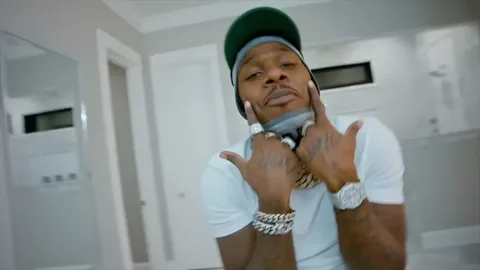
Touring and Live Performances
Live entertainment can be one of the most lucrative parts of a successful rapper’s career.
During his commercial peak, Kirk performed at concerts and festivals while his growing audience increased demand for his appearances.
A headline performance or festival booking can generate substantial gross revenue, but that amount should not be confused with personal profit.
Touring expenses may include:
- Management commissions
- Booking-agent fees
- Production
- Transportation
- Accommodation
- Security
- Crew salaries
- Equipment
- Taxes
Because his individual performance contracts are private, there is no reliable public figure for his current annual touring income.
Nevertheless, live performance has clearly been an important part of his overall business model.
Feature Appearances and Collaborations
Kirk’s commercial success also made him a highly recognizable collaborator.
He has worked with artists including Roddy Ricch, Megan Thee Stallion, Dua Lipa and YoungBoy Never Broke Again.
Feature appearances can generate income through negotiated fees, royalties or a combination of contractual arrangements.
The amount depends on the artist, project, release date, commercial expectations and agreement.
For that reason, it is safer to identify collaborations as an important revenue category rather than assign an unsupported annual dollar figure.
His presence on a major record can also create indirect financial value by increasing visibility and demand for his own catalog.
Billion Dollar Baby Entertainment
One of Kirk’s most important entrepreneurial moves was the development of Billion Dollar Baby Entertainment.
The imprint expanded his professional identity beyond that of a solo performer.
It became associated with artists such as Stunna 4 Vegas, giving Kirk a role within the broader music-business ecosystem.
A successful entertainment company can potentially earn through:
- Artist releases
- Distribution
- Publishing
- Licensing
- Merchandise
- Label services
- Related entertainment projects
The exact ownership structure and present valuation of the business are not sufficiently documented publicly.
For that reason, the company should be recognized as an important part of his entrepreneurial profile without adding an invented valuation to his personal assets.
Record Label Relationships
Kirk’s transition from independent releases to the major-label system was another important stage in his financial development.
His career became associated with South Coast Music Group and Interscope Records.
Major-label backing can provide access to:
- Distribution
- Marketing
- Promotion
- Radio relationships
- International reach
- Industry infrastructure
These resources can dramatically increase an artist’s commercial potential.
At the same time, major-label arrangements involve contractual revenue splits.
An album’s gross sales or streaming activity therefore cannot automatically be treated as money deposited into the artist’s account.
Brand Endorsements
Celebrity partnerships can become a significant source of income when an artist reaches mainstream visibility.
Kirk has been involved in commercial partnerships, including a highly publicized relationship with boohooMAN.
That partnership ended in 2021 after the controversy surrounding his Rolling Loud Miami performance.
The episode is financially relevant because it demonstrates how brand relationships can be affected by public reputation.
Endorsement income is also different from music revenue. A brand may pay for promotional appearances, social-media exposure, campaign participation or other commercial rights.
Exact contract values are generally private.
The 2021 Rolling Loud Controversy
The most serious professional setback of Kirk’s mainstream career came in 2021.
During his Rolling Loud Miami performance, he made comments concerning HIV/AIDS and gay men that were widely condemned as homophobic and medically inaccurate.
The response was significant.
Artists, advocacy organizations, festivals and commercial companies criticized the remarks. Several professional opportunities were subsequently affected.
The controversy became a major turning point in his public image.
Festival and Brand Consequences
Following the backlash, Kirk was removed from several festival lineups.
His relationship with boohooMAN also ended.
These developments mattered financially because festival appearances and brand partnerships can represent meaningful revenue for a major recording artist.
However, the exact value of every lost opportunity is not publicly known.
That makes it impossible to calculate a precise total financial loss.
Did He Lose $100 Million?
One of the most repeated claims surrounding the controversy is that Kirk lost $100 million because of the fallout.
There is no publicly audited financial evidence establishing that exact amount.
The claim generally relies on adding up hypothetical future opportunities rather than documented losses.
There is a meaningful difference between:
Confirmed loss: a documented canceled contract with a known value.
Potential loss: future concerts, endorsements or collaborations that might have happened.
Only the first category can be confidently included in a financial calculation.
It is reasonable to conclude that the controversy reduced his commercial opportunities and damaged his relationship with some brands and festivals.
It is not reasonable to state that he definitely lost a specific nine-figure amount without supporting contracts or financial records.
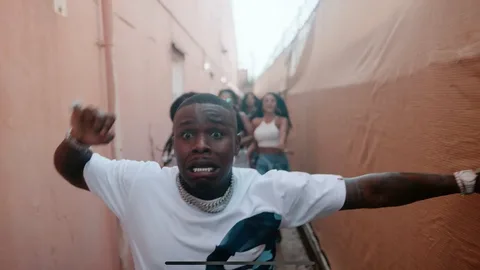
Reputation as a Financial Asset
Kirk’s career provides a useful example of how reputation affects celebrity economics.
For an established entertainer, public image can influence:
- Sponsorship opportunities
- Festival bookings
- Ticket demand
- Collaboration offers
- Media exposure
- Brand partnerships
- Feature-market demand
A positive reputation can increase commercial value.
A negative reputation can have the opposite effect.
Importantly, reputation damage does not necessarily destroy an existing music catalog.
Previously released songs can continue to earn royalties even when the artist’s public profile changes.
This helps explain why a performer can experience a decline in commercial opportunities without losing every source of income.
Major Achievements
The scale of Kirk’s wealth-building period is supported by a number of documented career accomplishments.
Billboard Albums
Kirk debuted at No. 1 on the Billboard 200 in 2019.
Blame It on Baby also reached the top position.
Back-to-back No. 1 projects established him as one of the most commercially successful rappers of his generation during that period.
Rockstar With Roddy Ricch
“Rockstar” became his signature commercial record.
The song reached No. 1 on the Billboard Hot 100 and became one of the biggest hip-hop releases of 2020.
Its success also expanded his international profile.
A record at that level can create value through streaming, publishing, performance rights, radio play and licensing.
Grammy Recognition
The Recording Academy lists Kirk with eight Grammy nominations.
His recognition includes nominations connected to major songs such as “Suge,” “Bop” and “Rockstar.”
Although he has not won the award, the nominations demonstrate substantial industry recognition.
RIAA Recognition
The Recording Industry Association of America certification system provides another measure of commercial performance.
Kirk’s catalog includes recordings that have received RIAA recognition.
Certifications demonstrate commercial milestones but do not reveal the artist’s personal profit.
That distinction remains important when converting career success into a wealth estimate.
Assets and Lifestyle
Kirk has maintained the luxury-oriented image commonly associated with mainstream hip-hop.
His public appearances have included designer clothing, jewelry and expensive vehicles.
But visible luxury should not automatically be counted as net worth.
A vehicle may be financed or leased. Jewelry may be promotional or purchased using borrowed funds. A property may be rented rather than owned.
For that reason, lifestyle imagery provides context but is weak evidence for calculating personal wealth.
Real Estate
Public reporting has associated Kirk with property interests, particularly around Charlotte and other locations connected to his career.
However, his complete current property portfolio is not publicly documented well enough to provide a reliable valuation.
Instead of assigning unsupported prices to homes or land, the more responsible approach is to acknowledge that real estate may form part of his assets while recognizing that current ownership and debt information are private.
This approach also prevents an inflated wealth estimate based on celebrity property rumors.
Cars and Luxury Purchases
Luxury vehicles have been part of Kirk’s public image.
Cars can certainly represent substantial purchases, but they are not always appreciating assets.
Most vehicles depreciate, while financed cars may still carry outstanding loans.
Consequently, simply adding the retail prices of vehicles seen in photographs would produce an unreliable estimate of his financial position.
The same principle applies to watches, jewelry and other high-value personal items.
Net Worth Growth Timeline
| Period | Financial Position | Main Drivers |
| 2014–2016 | Early career | Independent music and performances |
| 2017–2018 | Rising artist | Mixtapes, audience growth and industry relationships |
| 2019 | Rapid expansion | Baby on Baby, “Suge” and Kirk |
| 2020 | Commercial peak | Blame It on Baby, “Rockstar,” collaborations and performances |
| 2021 | Increased uncertainty | Festival removals and brand fallout |
| 2022 | Established catalog | Baby on Baby 2, streaming and performances |
| 2023–2025 | More difficult to measure | Catalog income, releases, appearances and business activity |
| 2026 | Estimated multi-million-dollar position | Music catalog, performances, collaborations and business interests |
This is a career-based estimate, not a year-by-year audited balance sheet.
The largest increase in earning potential occurred between 2019 and 2020, when multiple successful releases arrived in quick succession.
The later slowdown in mainstream visibility does not mean that revenue stopped.
Established recordings can continue producing royalties, while performances, collaborations and business activities can create additional income.
Why Peak Earnings Are Not the Same as Current Wealth
This is one of the most important points in celebrity-finance reporting.
Gross revenue, annual income and net worth are three different measurements.
Gross revenue is the amount generated by a business activity before expenses and revenue sharing.
Annual income refers to money earned during a particular period.
Net worth is the value of assets minus liabilities.
For example, an artist could generate millions from touring while paying substantial expenses to run the tour.
Likewise, a hit record can produce significant commercial revenue while the artist owns only a portion of its master or publishing rights.
This is why Kirk’s enormous commercial success during 2019 and 2020 should not be treated as proof that the same amount remains in his personal fortune today.
The Music Catalog as a Long-Term Asset
His recordings may be among his most important long-term financial assets.
Unlike a single concert, a successful song can continue producing income for years.
Potential catalog revenue can come from:
- Streaming
- Radio
- Licensing
- Film and television placement
- Public performance
- Digital sales
- Social-media use
- International consumption
The value of a catalog depends heavily on ownership.
An artist who owns substantial master and publishing rights can potentially receive much more long-term value than an artist who has transferred significant rights to other parties.
Kirk’s complete ownership percentages are not publicly disclosed.
Therefore, the exact market value of his catalog cannot be calculated confidently from public information alone.
Nevertheless, his strongest recordings give him an important source of recurring commercial potential.
His Financial Position in 2026
By 2026, the central question is no longer how quickly Kirk became famous.
The more useful question is how effectively he can convert the assets created during his peak years into long-term income.
His financial advantages include:
- A recognizable music catalog
- Multiple successful albums
- Billboard achievements
- Major collaborations
- International audience recognition
- Live-performance experience
- Billion Dollar Baby Entertainment
- Continued ability to release music
At the same time, there are challenges:
- Lower mainstream momentum than during his 2019–2020 peak
- Long-term effects of the 2021 controversy
- Less public information about current earnings
- Competition from newer artists
- Unclear valuation of private business interests
- Unknown personal liabilities
Taken together, these factors support a cautious multi-million-dollar estimate rather than an extremely high figure based solely on his peak celebrity status.
What His Career Teaches About Celebrity Wealth
Kirk’s financial story demonstrates why entertainment wealth is difficult to calculate from public headlines.
A chart-topping song can increase earning power without revealing the artist’s contractual share.
A sold-out tour can generate significant gross revenue while also carrying substantial expenses.
A brand partnership can provide valuable income but disappear after a public controversy.
And a successful catalog can continue generating money long after an artist’s peak period has passed.
The result is a financial picture that changes over time.
For that reason, the strongest estimate is not necessarily the biggest number. It is the number that can be explained using documented career evidence while clearly identifying what remains unknown.
Personal Life
Jonathan Lyndale Kirk was born on December 22, 1991, in Cleveland, Ohio, but Charlotte, North Carolina, became the city most closely associated with his upbringing and musical identity.
He is publicly known as a father of four children. His family life has occasionally appeared in interviews, music and entertainment coverage, although details about his children are generally best kept private.
His romantic relationships have also received media attention over the years. However, relationship status can change, so his current marital status is best described as not publicly confirmed rather than relying on outdated reports.
One of the most difficult personal events in his life occurred in 2020, when his brother Glenn Johnson died by suicide. The loss became an important part of the personal context surrounding the rapper during a period when his professional career was reaching its commercial peak.
Family and Charlotte Connection
Although Kirk was born in Ohio, Charlotte played a major role in shaping his career.
He developed his musical identity in the city, performed locally and built relationships within its hip-hop community before attracting wider industry attention.
That background is important because his rise represents the modern independent-to-mainstream path.
An artist no longer needs to begin in New York or Los Angeles to build a national audience. Streaming services, social platforms, independent distribution and local music scenes can create the foundation for a major career.
Kirk’s progression followed that pattern:
local development → independent releases → online exposure → industry partnership → mainstream success.
Public Image
Kirk’s public image has always been closely connected to his music, fashion, performances and outspoken personality.
That visibility helped him become one of the more recognizable rappers of his generation.
From a business perspective, recognition has real value.
Promoters want artists who can attract audiences. Brands want personalities who can reach consumers. Other musicians may want collaborators who can bring attention to a record.
But the same visibility can create significant risk.
The events surrounding his 2021 Rolling Loud appearance demonstrated how quickly public reputation can affect commercial relationships.

Interesting Facts
1. His Real Name Is Jonathan Kirk
The rapper’s full name is Jonathan Lyndale Kirk.
He later became widely known professionally as DaBaby after previously using the stage name Baby Jesus.
2. His Professional Music Journey Began Around 2014
Kirk spent several years working on music before becoming a mainstream star.
His early period involved independent releases, performances and audience building.
3. Baby on Baby Changed His Career
The 2019 project Baby on Baby introduced him to a much wider audience.
Its breakout track, “Suge,” became one of the defining records of his early career.
4. Kirk Reached No. 1
His album Kirk debuted at No. 1 on the Billboard 200 in 2019.
The result confirmed that his breakthrough had developed into broader commercial success.
5. Rockstar Became His Biggest Commercial Record
“Rockstar,” featuring Roddy Ricch, became one of his most successful songs.
The record reached No. 1 on the Billboard Hot 100 and became a defining hip-hop release of 2020.
6. He Has Eight Grammy Nominations
The Recording Academy lists Kirk with eight Grammy nominations.
Although he has not won a Grammy, the nominations demonstrate significant recognition from the music industry.
7. He Created Billion Dollar Baby Entertainment
His business interests extend beyond his own recordings.
Billion Dollar Baby Entertainment became an important part of his professional identity and was associated with artists including Stunna 4 Vegas.
8. He Built His Audience Before Mainstream Fame
Kirk’s story was not based entirely on one viral moment.
Years of independent work helped create the foundation for his later commercial breakthrough.
9. His Exact Personal Wealth Is Private
There is no publicly available audited statement that establishes his exact personal fortune.
That is why responsible estimates should use a range.
10. Reputation Has Affected His Business Opportunities
The 2021 Rolling Loud controversy demonstrated how public reputation can influence festival bookings, partnerships and other commercial opportunities.
Frequently Asked Questions
How much is DaBaby worth in 2026?
His current wealth is estimated at $4 million to $8 million. This is an informed estimate based on his music career, catalog, performances, collaborations and business interests rather than an audited financial statement.
How does DaBaby make money?
His main potential income sources include recorded music, streaming, royalties, touring, live performances, collaborations, publishing, licensing and business activities.
What is DaBaby’s real name?
His real name is Jonathan Lyndale Kirk.
How old is DaBaby?
He is 34 years old in 2026 and will turn 35 on December 22, 2026.
Where was DaBaby born?
He was born in Cleveland, Ohio, on December 22, 1991.
Where did he grow up?
Kirk spent much of his upbringing in Charlotte, North Carolina, which became closely connected to his musical career.
What is DaBaby’s biggest song?
“Rockstar” featuring Roddy Ricch is generally regarded as his biggest commercial hit. It reached No. 1 on the Billboard Hot 100.
What was his breakthrough song?
“Suge” from Baby on Baby was his major mainstream breakthrough and helped establish him as a nationally recognized rapper.
How many Grammy nominations does he have?
The Recording Academy lists him with eight Grammy nominations.
Has DaBaby won a Grammy?
No. He has received multiple nominations but has not won a Grammy Award.
Does he own a record label?
He founded Billion Dollar Baby Entertainment, an imprint connected to his music-business activities. The precise current ownership structure and valuation are not publicly established.
How many children does he have?
He is publicly reported to be the father of four children.
Is DaBaby married?
His current marital status is not reliably confirmed through authoritative public information.
Did the Rolling Loud controversy cost him $100 million?
There is no reliable public financial evidence proving a $100 million loss.
The controversy did result in documented professional consequences, including festival removals and the loss of a brand partnership. However, assigning a precise value to all hypothetical future opportunities would be speculative.
Is DaBaby still making music?
Yes. Kirk has continued working on music, collaborations and performances following his commercial peak.
Why the $4 Million–$8 Million Estimate Makes Sense
A useful wealth estimate should explain both the evidence and the uncertainty.
Several facts support a multi-million-dollar valuation.
He has:
- Multiple commercially successful albums
- Billboard No. 1 projects
- A No. 1 Hot 100 single
- A substantial streaming catalog
- Grammy nominations
- Touring experience
- High-profile collaborations
- Business interests
- A recognizable international audience
At the same time, several important financial details remain private.
There is no complete public record of:
- His bank balances
- Current investments
- Personal debt
- Tax obligations
- Exact royalty splits
- Recording-contract terms
- Business ownership percentages
- Current property values
- Full music-catalog ownership
These unknowns make an exact figure impossible to verify.
A range therefore provides a more credible representation of the available evidence.
Net Worth vs. Career Revenue
One of the biggest mistakes in celebrity-finance articles is treating career revenue as personal wealth.
These are different concepts.
Career revenue represents money generated by professional activities.
Income refers to earnings over a particular period.
Net worth represents assets minus liabilities.
A recording artist might generate millions from a successful song while receiving only a contractual percentage after other rights holders are paid.
A tour might produce substantial gross receipts while also requiring millions in expenses.
A luxury home might appear in a celebrity’s portfolio while carrying a mortgage.
This is why headline revenue figures should not automatically be converted into personal wealth.
What Could Increase His Wealth?
Several factors could strengthen Kirk’s financial position in the future.
A Stronger Music Catalog
New successful songs could add fresh streaming and publishing income while increasing the long-term value of his catalog.
Touring
A successful return to major touring or festival circuits could create a significant new revenue stream.
Business Expansion
Billion Dollar Baby Entertainment could become more financially important if its artists, releases or business operations expand.
Brand Relationships
A stable return to commercial partnerships could provide another source of high-margin entertainment income.
Catalog Licensing
Successful songs can potentially be licensed for films, television, advertising, games and other media.
What Could Reduce His Wealth?
The opposite risks also matter.
A decline in music activity could reduce new revenue.
Lower touring demand could affect performance income.
Business expenses, taxes and debt could reduce retained wealth.
Reputation issues could also make certain brands or promoters less willing to work with him.
This is why net worth should be treated as a moving financial estimate rather than a permanent number.
Editorial Methodology
This profile separates documented career information from financial estimation.
Industry sources such as Billboard, the Recording Academy, RIAA and official label information can help establish career achievements, chart performance, certifications and Grammy recognition.
News coverage can provide context for events such as the 2021 Rolling Loud controversy and its professional consequences.
Financial estimates require greater caution.
Kirk has not publicly released a complete personal balance sheet, so his exact assets, debts, contracts and ownership interests cannot be independently calculated.
The estimated $4 million–$8 million range is therefore an editorial assessment based on publicly available evidence rather than an audited statement.
Final Verdict
DaBaby’s estimated 2026 net worth is $4 million to $8 million.
His financial rise was driven by an unusually successful period between 2019 and 2020, when Baby on Baby, Kirk, Blame It on Baby, “Suge” and “Rockstar” transformed him into a major commercial force.
His wealth-building opportunities have extended beyond recordings.
Streaming, royalties, live performances, collaborations, brand partnerships and Billion Dollar Baby Entertainment have all contributed to his broader business profile.
At the same time, his career demonstrates why celebrity wealth should be examined carefully.
A No. 1 album does not tell us how much an artist personally retained. A major endorsement does not reveal the artist’s full contract. And a canceled booking cannot automatically be translated into a specific amount of lost wealth.
The 2021 controversy clearly affected his professional opportunities, but claims that he definitively lost $100 million are not supported by publicly audited financial evidence.
The most defensible conclusion is therefore straightforward:
Jonathan Lyndale Kirk remains a multi-millionaire, with his 2026 personal wealth reasonably estimated at $4 million–$8 million.
The actual figure could be higher or lower because private assets, liabilities, contractual arrangements and ownership interests are not fully public.
That uncertainty is not a weakness in the estimate. It is the reason a transparent range is more trustworthy than an invented exact number.
Disclaimer
Net-worth figures in this article are estimates based on publicly available information, including reported music activity, career achievements, streaming potential, touring, business interests, endorsements and publicly reported assets.
The exact financial position of Jonathan Lyndale Kirk has not been independently audited or publicly disclosed. Private contracts, taxes, debts, investments, ownership percentages, expenses and other financial obligations may materially affect his actual wealth.
Therefore, the $4 million–$8 million figure should be considered an informed editorial estimate, not an official financial statement.
you must read about us :DaBaby Net Worth: 7 Key Facts About His 2026 Wealth